
1488821-2 Price Strategy: How to Secure Best Cost & Lead
Many procurement teams face the same problem: quoted 1488821-2 price is high and lead time is long, and every day of delay adds cost. This guide cuts through the noise with a step-by-step, actionable strategy to secure the best cost and shorten lead time—without sacrificing quality or compliance. Expect practical templates, a three-row benchmark table, a worked days-to-dollar example, and a ready-to-use negotiation script to apply in the next supplier engagement.
1 — Understanding the 1488821-2 price components (Background)
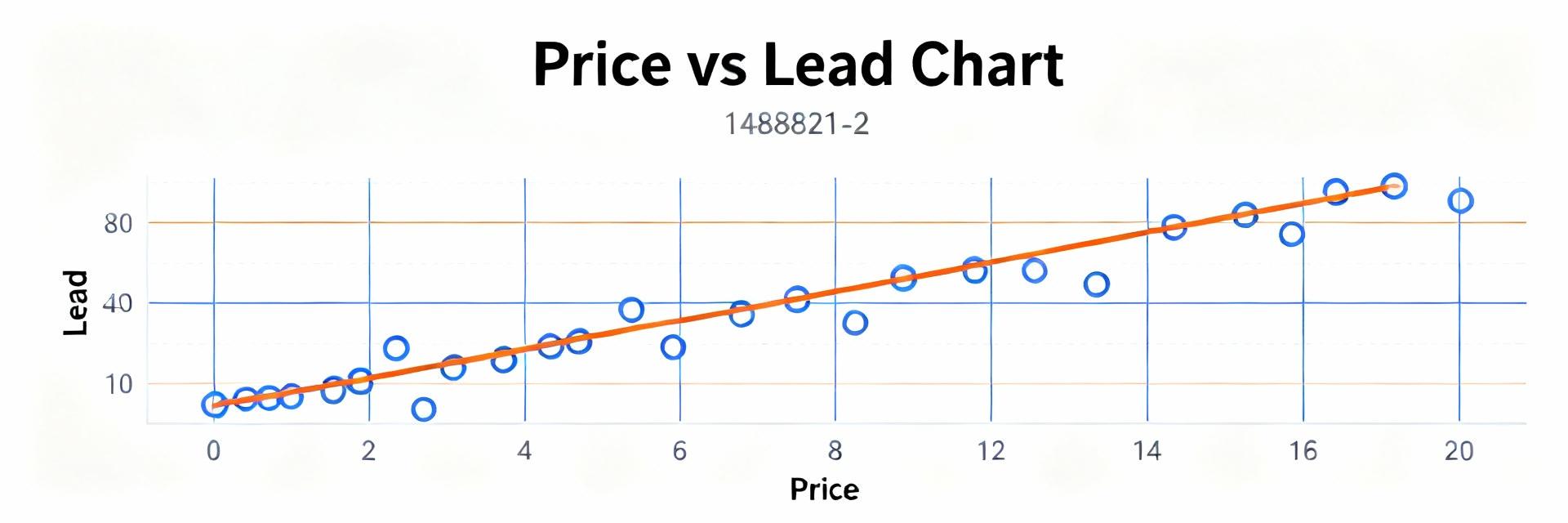
Cost breakdown: what drives the 1488821-2 price
Point: Unit pricing reflects fixed and variable elements that buyers often conflate. Evidence: Fixed costs include tooling amortization, minimum setup labor, and certification amortization; variable costs cover materials, per-unit labor, QA sampling, and packaging. Explanation: Request supplier cost breakdown documents—BOM, labor time studies, tooling amort schedules, and QA reports—to validate each element. A standardized cost-data request reduces negotiation ambiguity and anchors a fair target price range.
How lead time affects total cost (TCO)
Point: Lead time increases TCO beyond unit price. Evidence: Carrying cost, stockout risk, expedited freight, and lost sales compound daily. Explanation: Use a simple conversion: Carrying cost = Inventory value × carrying rate/365 × lead days. Example: If unit value is $5, annual carrying rate 25%, a 30-day lead adds $5 × 25% × 30/365 ≈ $0.10 per unit. Add expedited freight premium (e.g., $2 per unit) for rush orders and the effective cost gap widens quickly.
Worked example: two quotes—Supplier A: $4.80/unit, 60 days; Supplier B: $5.20/unit, 15 days. For a monthly demand of 10,000 units and carrying rate 20%, Supplier A’s extra 45 days implies carrying cost difference ≈ $4.80 × 20% × 45/365 ≈ $0.12/unit, plus higher buffer inventory and potential stockout risk. When factoring expedited risk, Supplier B can be lower TCO despite higher unit price.
2 — Market & supplier data to benchmark 1488821-2 price (Data analysis)
How to build a price benchmark for 1488821-2
Point: Benchmarks require structured historical and market data. Evidence: Capture RFQ outcomes, past POs, distributor listings, and internal aggregator histories with fields: unit price, MOQ, lead time, incoterm, and warranty. Explanation: Build a simple three-column table (see sample) and compute median, 10th/90th percentiles, and weighted averages by historical volume to set a defensible target range for negotiation and to spot outliers.
| Source | Unit Price (USD) | Lead Time (days) |
|---|---|---|
| Past PO (preferred supplier) | $4.95 | 30 |
| Recent RFQ (alternates) | $5.20 | 14 |
| Distributor historical | $5.10 | 21 |
Lead time trends & seasonality to watch
Point: Lead times fluctuate with capacity cycles and logistics stress. Evidence: Suppliers show quarterly capacity ramps, holiday slowdowns, and port congestion peaks that elevate lead times. Explanation: Track a 12-week moving average of lead time per supplier and set renegotiation triggers (e.g., moving average > target + 20%). Document seasonal demand windows and plan order cadence or safety stock accordingly to avoid premium expedites.
3 — Sourcing strategies to secure the best cost for 1488821-2 (Method/How-to)
Supplier segmentation & negotiation levers
Point: Segment suppliers to focus leverage where it matters. Evidence: Classify as preferred (high capability, price-sensitive), alternate (competitive but limited capacity), and contingency (backup). Explanation: Negotiation levers include volume commitments, multi-year contracts, consolidated shipments, joint forecasting, and co-investment in tooling. Prepare a BATNA and concession schedule: opening offer, walk-away limit, and staged concessions tied to volume or payment terms.
Pricing tactics: structure offers to lower effective cost
Point: Shift focus from unit price to effective total cost. Evidence: Propose tiered pricing by volume, include freight-in options, add rebates tied to performance, and pursue early-payment discounts. Explanation: Use a pricing matrix template for suppliers that compares EXW, FOB, and delivered costs across volume tiers; this clarifies which structure yields the lowest landed cost and aligns supplier incentives with your demand stability.
4 — Tactics to shorten lead time without increasing spend (Method/How-to)
Production and logistics levers that reduce lead time
Point: Operational levers often shorten lead time with minimal price impact. Evidence: Local buffering, dual-sourcing, pre-production runs, supplier Kanban, and air/sea mix optimization reduce response times. Explanation: Qualify suppliers for expedited runs with a checklist: demonstrated surge capacity, on-time delivery ≥ 95% over last 6 orders, and documented capacity certificates. These steps lower lead-time variance and reduce costly rush behavior.
Contractual tools to lock in lead time performance
Point: Contracts convert operational expectations into enforceable outcomes. Evidence: Include SLAs with delivery windows, penalties/incentives, acceptance tests, and escalation paths. Explanation: Sample KPIs: on-time delivery %, lead-time variance (std dev), and expedited order response time. Use economic incentives (rebates for early delivery) rather than punitive-only clauses to preserve supplier goodwill while securing performance.
5 — Case scenarios: applying the strategy in real procurement situations (Case study)
High-volume, long-lead scenario — step-by-step plan
Point: For large programs, combine benchmarking, forecasting, and contract levers. Evidence: Six-step playbook—benchmark, firm forecast, negotiate tiers, insert lead-time SLAs, pilot order, scale to full production. Explanation: Conservative assumptions show 5–12% effective cost reduction and lead-time shrinkage from 60 to 30 days when volume tiers and SLAs are applied; savings compound across annual volumes and reduce expedited spend.
Low-volume or urgent-buy scenario — trade-offs & quick wins
Point: Small volumes require different trade-offs. Evidence: Emergency buys often accept a one-off premium versus amortizing cost over future buys or switching to local temporary sourcing. Explanation: Use a decision matrix: pay premium when time-to-revenue loss > premium cost; prefer longer lead time plus safety stock when margins are thin. Quick wins: short-term local buys, consolidated small shipments, or immediate partial deliveries.
6 — Practical checklist & negotiation script for buying 1488821-2 (Actionable takeaway)
Pre-negotiation checklist (10 items)
Point: A standard checklist prevents missed leverage. Evidence: Include validated spec, benchmarked price range, confirmed demand forecast, supplier capability evidence, preferred incoterm, baseline lead time, cost breakdown, risk register, target concessions, and fallback supplier list. Explanation: Run this checklist before any commercial conversation to ensure negotiating from an informed, credible position and to shorten decision cycles during supplier talks.
Negotiation script & contract clauses to use
Point: A concise script keeps discussions focused and professional. Evidence: Sample opening (email/phone) and three must-have clauses below. Explanation: Use the script to set tone and then follow with contract clauses that lock outcomes and cadence for review.
Sample negotiation script (email/phone): “We’ve benchmarked comparable offers and expect a target landed cost of $X–$Y for 1488821-2. We can offer a committed 12-month volume of Z units if you can meet lead time ≤ 30 days and agree to tiered pricing tied to volumes. Can we discuss a draft SLA and pricing matrix this week?”
- Must-have clause 1: Price review cadence—quarterly review with agreed indexation mechanics.
- Must-have clause 2: Lead-time SLA with incentives—bonus for early delivery, capped penalty for late shipments.
- Must-have clause 3: Quality acceptance criteria—inspection sampling plan and defect remediation timeline.
KPIs to monitor post-agreement: on-time delivery %, lead-time variance, expedited orders per quarter, and rebate / penalty reconciliation cadence. Schedule a monthly business review for the first 90 days, then quarterly.
Conclusion (summary + next steps)
To secure the best 1488821-2 price and shorten lead time, combine data-driven benchmarking, targeted negotiation levers (volume, payment, bundling), lead-time-focused logistics, and contractual SLAs. Next steps: run the pre-negotiation checklist, populate the three-row benchmark table with your sources, and use the negotiation script in your next supplier engagement to pursue best cost and improved lead time.
Key summary
- Benchmark prices using RFQs, past POs, and distributor data to set a defensible target for the 1488821-2 price and spot outliers.
- Quantify lead-time impact in dollars—use carrying cost formulas and expedited premiums to compare TCO rather than unit price alone.
- Negotiate using volume tiers, SLAs, and joint forecasting; include incentives to align supplier behavior and reduce lead time.
Common questions
How to reduce lead time for 1488821-2?
Short answer: combine operational and contractual levers—dual-sourcing, pre-production runs, supplier Kanban, and SLA clauses with incentives. Verify supplier surge capacity and include expedited qualifications in the contract to ensure rapid response when needed.
What is the best cost negotiation approach for 1488821-2?
Use a data-backed opening offer anchored to a benchmark, present a volume-backed concession (tiered pricing or multi-year commitment), and structure rebates or early-payment discounts to share upside while protecting margin and performance.
How to build a 1488821-2 price benchmark?
Collect RFQs, past POs, and distributor quotes, capture fields (unit price, MOQ, lead time, incoterm), compute medians and percentiles, and weight by historical demand. Present the table to suppliers to justify your target range and negotiate from a credible stance.