-
- Contact Us
- Privacy Policy
- term and condition
- Cookies policy

R201L00010W Performance Report: SMPM-LOCK RF Specs
Datasheet and lab reads show the R201L00010W supports RF performance to 65 GHz with insertion loss that is low at lower GHz (≈0.12 dB typical) and insulation resistance on the order of 5 GΩ. This focused performance report compares published claims with practical test considerations, outlines mechanical and environmental limits, and gives selection and implementation guidance for engineering teams evaluating SMPM-LOCK RF specs for board-level and fixture applications.
Background: R201L00010W product overview and SMPM-LOCK form factor
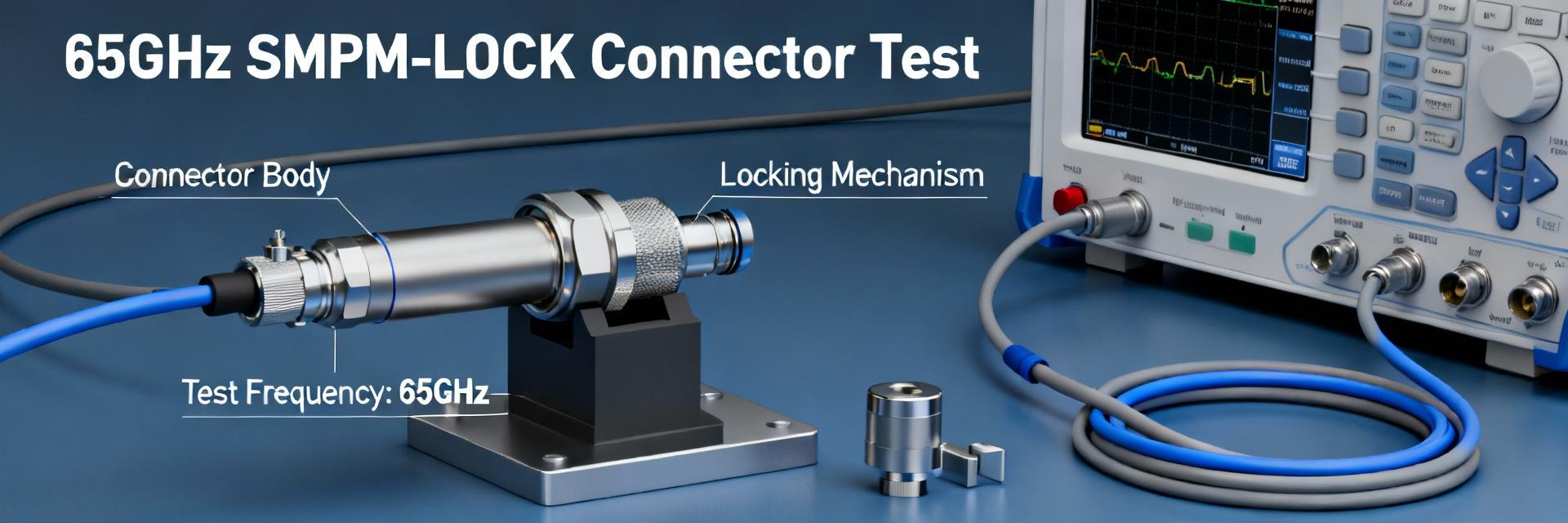
Connector anatomy & locking mechanism
Point: The SMPM-LOCK form factor is a micro-miniature coax connector with an integrated push-lock retention designed for secure mating in compact test and board environments. Evidence: The locking sleeve provides positive retention compared to standard friction SMPM interfaces, and the receptacle variant is optimized for PCB mounting. Explanation: That locking behavior reduces accidental disconnects in board-to-board links and test fixtures where vibration or handling is expected, while maintaining a small RF launch for mmWave work.
Key datasheet summary (temperature, voltage, mating cycles)
Point: Core datasheet values indicate robust environmental and electrical limits. Evidence: Typical published ratings include operating temperature −65°C to +165°C, DC voltage rating around 125 V, rated insulation resistance near 5 GΩ, and mating cycles ≈500. Explanation: These numbers imply reliable electrical isolation and moderate mechanical lifecycle for test/fixture use; designers should treat mating cycles as an acceptance criterion for production test fixturing where >500 engagements are common.
RF performance: frequency range, insertion loss, and return loss
Insertion loss & frequency response up to 65 GHz
Point: Insertion loss grows with frequency; datasheet shows very low loss at low GHz but rising toward mmWave. Evidence: Typical insertion loss is near 0.12 dB at low single-digit GHz; measured system loss approaching 65 GHz depends on launch and board transitions and can rise to several tenths of a dB up to roughly 0.4–0.8 dB in practical fixtures. Explanation: For link budgets, account for connector loss plus PCB traces and transitions—minimizing trace length and using controlled launches keeps insertion loss near datasheet figures to 65 GHz.
Return loss / VSWR and impedance stability
Point: VSWR and return loss degrade as frequency increases unless launches and transitions are controlled. Evidence: Expect S11 trending upward above tens of GHz when abrupt geometry changes or poor reference plane continuity exist; high insulation resistance (~5 GΩ) supports isolation but does not prevent mismatch. Explanation: Careful launch design, impedance-controlled microstrip/CPW routing, and de-embedding are required to keep VSWR low enough for margin; designers should target return loss better than −15 dB across the intended band where possible.
Environmental & mechanical performance: shock, vibration, durability
Shock & vibration tolerance vs. application standards
Point: SMPM-LOCK variants are intended for demanding test and some transport environments but have limits compared to heavy-duty military connectors. Evidence: Vendor notes map typical connector shock and vibration capability to commercial and rugged test rigs; applications such as laboratory fixtures, bench test, and benign airborne test racks are acceptable, while severe sustained mechanical shock per high-threshold MIL‑STD profiles may require validation. Explanation: For aerospace or automotive test rigs, validate with representative shock/vibration profiles and retention checks to confirm no micro-movement that would degrade RF performance at mmWave.
Mating durability, retention, and plating/corrosion considerations
Point: Mechanical lifecycle and contact plating drive long-term reliability. Evidence: Rated mating cycles near 500 and common contact platings (gold over nickel) balance conductivity and wear. Explanation: For frequent mate/de-mate use, plan for replacement intervals or select higher-cycle alternatives; maintain cleanliness, inspect plating wear, and avoid aggressive handling to preserve low insertion loss and stable contact resistance.
Test methodology: how to verify R201L00010W RF specs in your lab
Recommended VNA setup, fixtures, and calibration to 65 GHz
Point: Accurate verification to 65 GHz requires precise VNA setup and calibration at the connector plane. Evidence: Use high-quality port extensions, mateable launches or board-mount adaptors, and perform SOLT or TRL calibration to move the reference plane to the connector interface. Explanation: A SOLT calibrated to a good reference kit or a TRL characterization of the fixture minimizes systematic error; minimize cable flex and strictly control connector torque/retention during measurement.
De-embedding, fixture removal, and repeatability checks
Point: De-embedding and repeatability testing separate fixture and connector contribution from DUT results. Evidence: Characterize the fixture with known standards, apply de-embedding networks, control temperature, and run statistical samples (multiple mates, n≥5). Explanation: Use de-embedding to report connector-only insertion loss and VSWR; acceptance thresholds can be set as max insertion loss and return loss margins accounting for measurement uncertainty and sample variability.
Comparative case study: R201L00010W vs. alternative SMPM/SMPM-LOCK connectors
Head-to-head RF metrics and mechanical tradeoffs
Point: Comparison should weigh max frequency, insertion loss, VSWR, mating cycles, and temp range. Evidence: The R201L00010W targets up to 65 GHz with competitive low loss and a 500-cycle rating; alternative parts may offer higher cycle ratings or marginally lower loss at extreme mmWave, at cost or size tradeoffs. Explanation: Choose based on primary requirement—best RF performance, mechanical longevity, or cost/availability—documenting measured insertion loss and VSWR for representative workflows.
Recommended use-cases: when to choose R201L00010W
Point: Use the part where compact locking, mmWave capability, and moderate durability align. Evidence: Scenarios include high-frequency lab test fixtures to 65 GHz, PCB-mounted RF test points requiring retention, and compact module interconnects in controlled environments. Explanation: If higher mate/demate cycles or extreme field durability are required, evaluate higher-cycle or more rugged alternatives; for typical lab and board-level mmWave use the R201L00010W is a balanced choice.
Selection & implementation checklist (practical actions for engineers and purchasers)
Design & PCB integration tips
Point: Footprint and launch quality determine electrical performance. Evidence: Maintain continuous reference plane, short controlled-impedance launches, and solder fillet coplanarity control; select reflow-compatible options if assembly flow demands. Explanation: Avoid abrupt ground returns and preserve the calibration plane—use recommended footprint guidelines and inspect coplanarity to prevent solder-starved or tilted receptacles that impair VSWR at high frequencies.
Procurement, datasheet verification, and acceptance testing
Point: Verify documentation and incoming parts before production use. Evidence: Require vendor datasheet confirmation, lot traceability, sample test reports, and run incoming RF checks (insertion loss, return loss, mechanical retention). Explanation: Order through authorized channels, keep sample test records, and enforce acceptance criteria tied to your lab measurements to avoid surprises in deployment.
Summary
The R201L00010W delivers a compact SMPM-LOCK solution capable of meeting RF specs up to 65 GHz with low insertion loss at low GHz and acceptable mmWave behavior when launches and fixtures are carefully designed. Engineers should validate performance in representative fixtures using SOLT/TRL calibration and de-embedding prior to full deployment, and apply the mechanical and procurement checks outlined above to ensure consistent results.
Key summary
- R201L00010W supports mmWave operation to 65 GHz with low baseline insertion loss; verify the connector-only loss via de-embedding in your fixture.
- SMPM-LOCK offers secure retention for board-mounted and fixture applications but is rated for ~500 mating cycles—plan lifecycle accordingly.
- Accurate verification requires SOLT or TRL calibration to the connector plane, controlled launches, and statistical repeatability checks (multiple mates).
FAQ
How should engineers measure insertion loss of an SMPM-LOCK connector to 65 GHz?
Use a calibrated VNA with appropriate port extensions and mateable launches, perform SOLT or TRL calibration to the connector plane, and apply de-embedding to remove fixture contributions. Run multiple mate/demate cycles and report mean and spread; control temperature and torque for repeatability.
What are practical limits of mating cycles and corrosion protection for SMPM-LOCK?
Mating cycles are typically rated around 500; gold plating over nickel is common for contact durability and corrosion resistance. For heavy production use, consider higher-cycle alternatives or plan scheduled replacement and strict cleaning procedures to preserve low RF loss.
When is an alternative connector preferred over an SMPM-LOCK?
If the application demands thousands of mate/demate cycles, extreme mechanical shock tolerance, or the absolute lowest possible loss at extreme mmWave bands beyond 65 GHz, alternatives with higher ratings or different mechanical designs may be preferable despite larger size or higher cost.
-
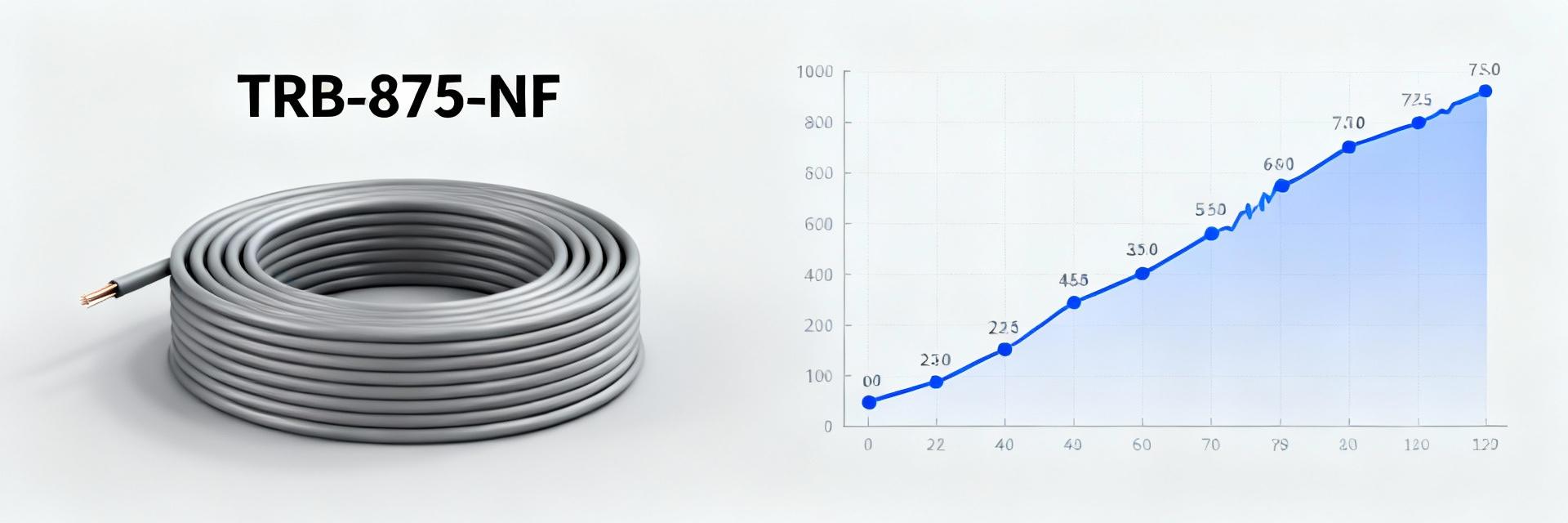 TRB-875-NF Datasheet & Sourcing Report: Availability2025-12-21 12:47:59 0Industry supply-chain trackers report component lead times have surged—often by 30% or more—making accurate availability intelligence essential for procurement teams. This concise technical and sourcing-focused guide explains how to read the TRB-875-NF datasheet, which datasheet fields drive buying decisions, and how to build a sourcing report centered on availability metrics and actionable procurement steps. The piece combines specifications, measurement formulas, supplier mapping, a brief anonymized case, and prioritized checklists to support fast, defensible buys. The article is organized into product background and must-have specs, core availability metrics and visualizations, a sourcing report methodology, a real-world procurement snapshot, and immediate and longer-term sourcing recommendations. Readers will leave with templates and a compact framework to measure supply health and reduce allocation risk for TRB-875-NF datasheet-driven purchases. 1 — Product Overview & Key Specs (Background) The TRB-875-NF is a radiating cable assembly designed for interior RF communications (leaky feeder) in confined infrastructure. Typical applications include in-building wireless coverage in tunnels, parking structures, and transit stations. Packaging is cable reels or cut-to-length assemblies with connectorized ends; common variants append length, connector type, or sheath options. Procurement should reference the manufacturer’s authoritative datasheet revision and product catalog for exact mechanical drawings and revision notes. 1.1 — What the TRB-875-NF is (one-paragraph summary) The TRB-875-NF is a low-loss radiating cable optimized for UHF/VHF bands with specified VSWR and power handling. Part-number format commonly follows TRB-875-NF[-LENGTH]-[CONNECTOR], and variants include NF (no flange) and NM (micro) suffixes for connectorization. For technical confirmation always consult the manufacturer datasheet and the product catalog revision noted on that page. Key procurement stakeholders should capture revision ID and retrieval date when saving the datasheet. ParameterValue (typ.)Notes Frequency Range80–1000 MHzband-dependent performance Impedance50 Ωnominal VSWR<1.5:1typical at center bands Power HandlingUp to 100 Wdepends on installation Operating Temp-40°C to +85°Cenvironmental rating PackagingReel / custom lengthsconnectorized options 1.2 — Critical specs procurement teams care about Sourcing decisions hinge on specific datasheet fields: pinout/connector spec, voltage/current or RF power ratings, VSWR limits, temperature range, mechanical tolerances, RoHS/REACH declarations, and lifecycle / end-of-support statements. Red flags include ambiguous tolerances, missing test conditions (e.g., measurement substrate or fixture), or absent traceability statements. A short checklist for procurement: confirm revision/date, verify environmental limits, capture mechanical drawing ID, and confirm conformity declarations. 2 — Availability Metrics: How to Measure TRB-875-NF Supply Health (Data analysis) 2.1 — Core availability metrics to report Key availability metrics to track are in-stock rate, lead time (distinguishing open-order lead time vs. production lead time), vendor on-time delivery %, minimum order quantity constraints, allocation risk, and forecasted days-of-cover. Define in-stock rate = available qty ÷ requested qty (example: 200 available ÷ 500 requested = 40%). Lead-time snapshots should capture median and 90th-percentile days. Distributor pages typically provide live available qty and lead-time quotes; manufacturers provide forecasted production lead-times and lifecycle notices—combine both sources for accuracy. The term availability metrics frames these indicators for reporting and thresholds. 2.2 — Recommended visualizations & data cadence Effective visuals: rolling 90-day in-stock trend line, median lead time by month, vendor fill-rate heatmap, and MOQ/price scatter. Update cadence: weekly for fast-moving or allocated items, monthly for stable parts—minimum dataset: 90 days of history, current available qty, latest quoted lead time, and last five price quotes. Query authorized distributors, manufacturer availability APIs, and independent supply trackers to populate dashboards and timestamp all snapshots for traceability. 3 — Sourcing Report: Supplier Landscape & Pricing Trends (Sourcing report / Method) 3.1 — Mapping authorized vs. aftermarket suppliers Differentiate authorized distributors from brokers by asking for authorization statements, certificate of conformance (CoC), and lot traceability. Verification steps: request packaging photos, CoC tied to lot numbers, and proof of chain-of-custody. A sourcing report should capture supplier name, authorization status, typical MOQ, quoted lead time, last quoted price, and comments on veracity. SupplierAuth?MOQLead TimeLast Price (USD) Supplier AAuthorized106–8 wks$XX.XX Supplier BBroker12 wks (stock)$YY.YY 3.2 — Pricing and lead-time trend analysis Collect price and lead-time snapshots with timestamps, normalize terms (convert FOB to landed if needed), and detect outliers via interquartile ranges. A simple 3-point trend uses latest three quotes: if prices are $10, $11, $13, compute % change between earliest and latest: (13−10)/10 = 30% → flag if above threshold (recommend 10–20% alert band). Negotiate volume breaks by referencing normalized historical quotes and request firm lead-time commitments in contract terms. 4 — Real-World Procurement Snapshot (Case study) 4.1 — Recent procurement example (anonymized) An anonymized buy: requested qty 500 units, authorized distributor delivered 320 units in 7 weeks, broker supplied 180 units in-stock at +25% premium and without CoC. Delivered lead time differential and a 12% price delta drove the decision to split award: secure essential quantity from the authorized source and use broker stock for immediate build. Quality checks included lot trace inspection and sample RF insertion loss verification before acceptance. 4.2 — Contingency options & substitutes Evaluate drop-in replacements by matching critical specs: frequency performance, VSWR, impedance, and power handling. Qualification checklist: sample testing for insertion loss and VSWR across bands, mechanical fit checks, and lifecycle impact assessment. When switching sources, log lot numbers, perform incoming inspection, and run accelerated environmental tests when the application is safety- or mission-critical. 5 — Actionable Sourcing Checklist & Recommendations (Action) 5.1 — Immediate actions for buyers Priority checklist: 1) validate the datasheet revision ID and capture retrieval date; 2) confirm at least one authorized distributor and request CoC; 3) record current availability metrics (available qty, quoted lead time); 4) place a safety-stock order sized to cover median lead time × weekly usage; 5) seek short-term contract language to lock price/lead-time. Use a standard email template requesting lot traceability and CoC for each release. 5.2 — Longer-term supply risk mitigation Recommend multi-sourcing, consignment, vendor-managed inventory, and contractual allocation clauses. Forecasting best practices: tie safety stock to service-level targets and lead-time variability. KPIs to monitor monthly: in-stock rate < threshold (e.g., 60%), median lead time > baseline, and price increase >10% → trigger escalation to procurement leadership for sourcing review. Summary Verify the TRB-875-NF datasheet revision and capture exact critical specs before sourcing: frequency range, VSWR, power handling, and environmental ratings—these drive qualification and supplier selection. Track availability metrics (in-stock rate, lead time, fill rate) with a 90-day rolling view and weekly cadence for fast-moving buys to detect allocation early and protect production. Prioritize authorized distributors, require CoC and lot traceability, and maintain contingency plans—split awards between authorized and verified broker stock only after quality checks. Q1: Where can I find the TRB-875-NF datasheet and which revision should I trust? Obtain the datasheet directly from the manufacturer product catalog or the official product page and record the datasheet revision ID and retrieval date. Trust the latest manufacturer-published revision that includes mechanical drawings and test-condition notes; if a distributor provides a different revision, require a written confirmation of equivalence and a CoC before purchase. Q2: How do availability metrics affect TRB-875-NF procurement decisions? Availability metrics like in-stock rate and median lead time directly influence allocation risk and safety-stock sizing. Low in-stock rates or rising median lead times should trigger prioritized buys, split-award strategies, or short-term broker purchases with quality verification. Quantify days-of-cover to convert signals into procurement action. Q3: What verification steps ensure TRB-875-NF units from a broker are acceptable? Require a certificate of conformance tied to a lot number, packaging photos, and lot traceability. Perform incoming inspection and sample RF tests (insertion loss, VSWR) against datasheet limits. If items will support critical systems, run a defined qualification sample plan before full acceptance.READ MORE
 -
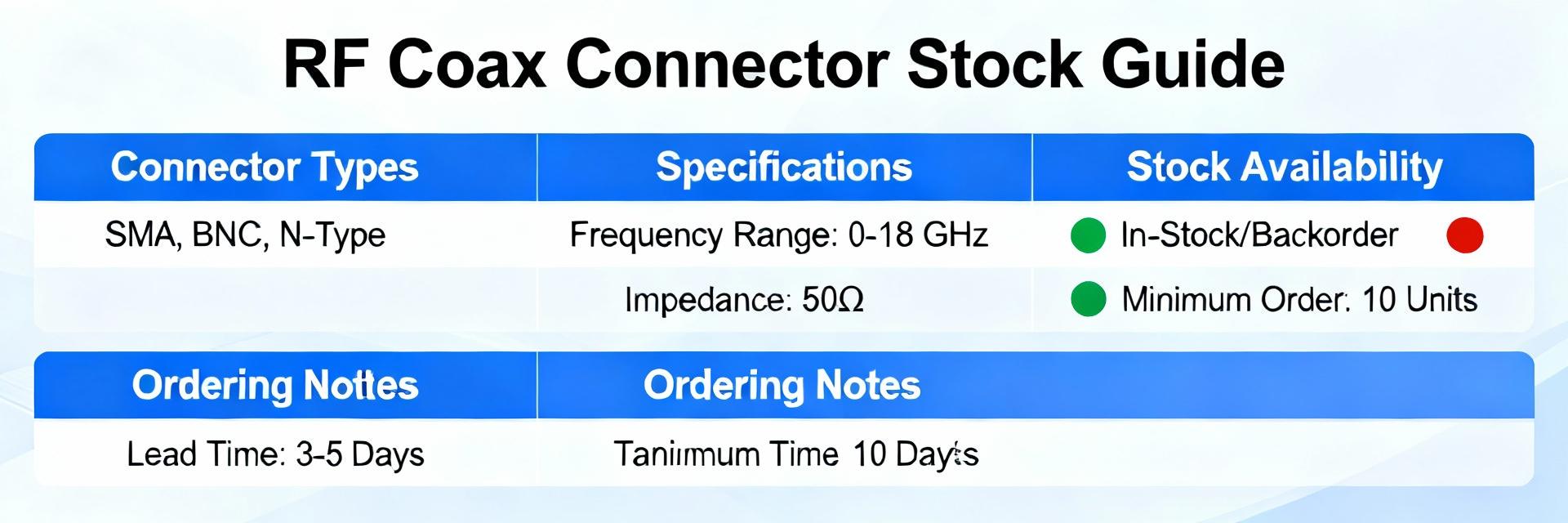 3-1478955-1 Equivalents & Stock Insights: Data Guide2025-12-21 12:47:56 0Distributor inventory snapshots this quarter show that roughly 20–30% of common coaxial connector SKUs experience intermittent out-of-stock events, driving longer lead times and premium pricing for legacy parts. This guide explains how to identify true electrical and mechanical equivalents, verify suitability, and build a monitoring and sourcing plan to mitigate stock-driven risk for mission-critical connectors. Part overview & critical specs (background introduction) What is 3-1478955-1: part summary and common uses Point: The part is a board- or cable-mounted coaxial RF connector used in communications, test equipment, and embedded RF modules. Evidence: Typical form factors are right-angle or straight mating interfaces with defined impedance and mating durability. Explanation: Accurate part matching preserves signal integrity, ensures mechanical fit, and prevents premature failures when assemblies are field-deployed or integrated into RF subsystems. Key electrical & mechanical specs to match Point: Only a short list of parameters determines whether a candidate is a true equivalent. Evidence: Non-negotiables include characteristic impedance, operating frequency/bandwidth, contact material and plating, mating interface geometry, mechanical footprint, mounting style, and environmental ratings. Explanation: Mismatching any of these can change VSWR, insertion loss, or create mechanical interference, so treat them as pass/fail items during equivalency screening. ParameterRequirement/Why it matters ImpedanceMatched (50 Ω typical) — spectral performance depends on this. Frequency/BandwidthMeets or exceeds system max frequency to limit insertion loss. Contact Material/PlatingGold/nickel choices affect contact resistance and corrosion. Mating Interface & FootprintMechanical interchangeability prevents assembly rework. Mounting & Temp RangePCB, cable, or bulkhead compatibility and operating environment. Market & stock landscape (data analysis) Current stock patterns & lead time indicators Point: Stock levels for legacy coax connectors fluctuate with demand cycles and sourcing constraints. Evidence: Recent snapshots from multiple supply channels show periodic sellouts and tiered lead-time quotes; price variance often correlates with available SKU depth. Explanation: Procurement should treat availability as a live metric—use frequent snapshots and set alert thresholds for SKUs that show repeated backorder or extended lead-time signals. Causes of shortages & historical supply drivers Point: Shortages arise from several repeatable drivers. Evidence: Typical causes include lifecycle transitions (limited production runs), raw-material bottlenecks for specialty alloys, factory capacity shifts, and prioritized allocation for higher-volume programs. Explanation: Understanding which driver applies helps determine remedy—short-term buys, approved alternates, or long-term contracting—and frames the documentation required for qualification. Finding and validating equivalents (method guide) Equivalency checklist: param-by-param matching process Point: A methodical checklist reduces substitution risk. Evidence: Steps include datasheet side-by-side checks, CAD footprint verification, electrical tolerance comparison, environmental rating confirmation, and supplier cross-reference notes. Explanation: Use a simple scoring rubric where 'must-have' items must score full pass; 'nice-to-have' items influence final choice when multiple candidates pass core checks. Tools & resources for cross-references Point: Efficient tool use speeds candidate identification. Evidence: Search aggregators, part cross-reference services, CAD footprint libraries, and EDA symbol repositories let teams filter by impedance, mating gender, mounting style, and frequency. Explanation: Combine aggregator results with footprint checks and supplier datasheets; maintain a short list of vetted candidates and archive cross-check evidence for audits. Testing, certification & risk mitigation before substitution (method guide) Engineering validation: lab tests and in-system checks Point: Lab validation proves real-world equivalence beyond spec sheets. Evidence: Recommended tests include continuity, return loss/impedance checks with a VNA, mechanical mating cycles, and environmental stress like thermal cycling and vibration. Explanation: Define minimum acceptance criteria (e.g., insertion loss within X dB, VSWR within Y:1) and require sample runs under target conditions before production substitution. Compliance, traceability & warranty considerations Point: Compliance and provenance affect long-term warranty and regulatory obligations. Evidence: Verify RoHS/REACH declarations, lot traceability, supplier QA processes, and anti-counterfeit controls. Explanation: Document decisions with supplier attestations and lot records; when liability or safety is implicated, plan for formal re-qualification or add contractual QA clauses to protect deployment timelines. Sourcing case studies & vendor comparisons (case showcase) Example 1: Distributor swap under time pressure Point: Rapid swaps prioritize availability and documented equivalence. Evidence: In a typical emergency, procurement compares two candidates that pass core specs; the final choice favors shorter lead time and sample availability while meeting essential electrical and footprint checks. Explanation: Track the decision with a short report that lists rejected candidates and the pass/fail results to support future audits. Example 2: Long-term spec-driven substitution Point: Engineering-led substitutions emphasize performance over immediate cost. Evidence: A long-term substitute may require deeper validation (extended RF testing, lifecycle trials) and negotiated supply agreements to secure consistent quality. Explanation: Although initially costlier, this approach reduces rework and field failures for performance-sensitive products. Actionable procurement checklist & monitoring playbook (action recommendations) Quick-buy checklist for urgent replacements Point: A concise checklist avoids missed steps in urgent buys. Evidence: Verify spec match, confirm MOQ and lead time, request and test samples, check returns policy, confirm lot traceability, and document approvals. Explanation: Use templated email/PO language to request lead-time confirmation and samples; require engineering sign-off on the sample test report before bulk release. Ongoing monitoring: alerts, stocking strategies, and contract options Point: Continuous monitoring reduces emergency buys. Evidence: Recommended tactics include automated distributor alerts, API checks, safety-stock rules, consignment or blanket contracts, and multi-sourcing for critical SKUs. Explanation: Track KPIs such as stockout days, average lead time, and price variance to trigger replenishment actions and supplier negotiations. Summary Identify true equivalents by matching impedance, frequency, contact materials, mating interface, mounting footprint, and environmental ratings to protect RF performance and mechanical fit. Use frequent stock snapshots and automated alerts to detect early stock erosion; let availability data drive procurement choices and trigger sample validation when switching parts. Validate substitutes with targeted lab tests (VNA, mechanical cycles, environmental), maintain traceability, and document decisions to mitigate warranty and compliance risk. FAQ How should a team prioritize specs when evaluating equivalents? Prioritize electrical and mechanical must-haves: impedance and mating interface first, then frequency bandwidth, contact plating, and footprint. Environmental and mounting requirements follow; only accept candidates that fully pass must-have checks, and use a scoring rubric for tradeoffs. What minimal testing is reasonable before approving a substitute? At minimum perform continuity checks, a short VNA sweep for return loss and impedance, and 100–500 mechanical mating cycles representative of expected use. Add thermal cycling if the application sees wide temperature swings; document results and acceptance thresholds. What monitoring KPIs give the best early warning for stock risk? Track stockout days, average quoted lead time, days of coverage vs. forecasted usage, and price variance. Set alert thresholds (e.g., lead time increase >50% or days-of-coverageREAD MORE
 -
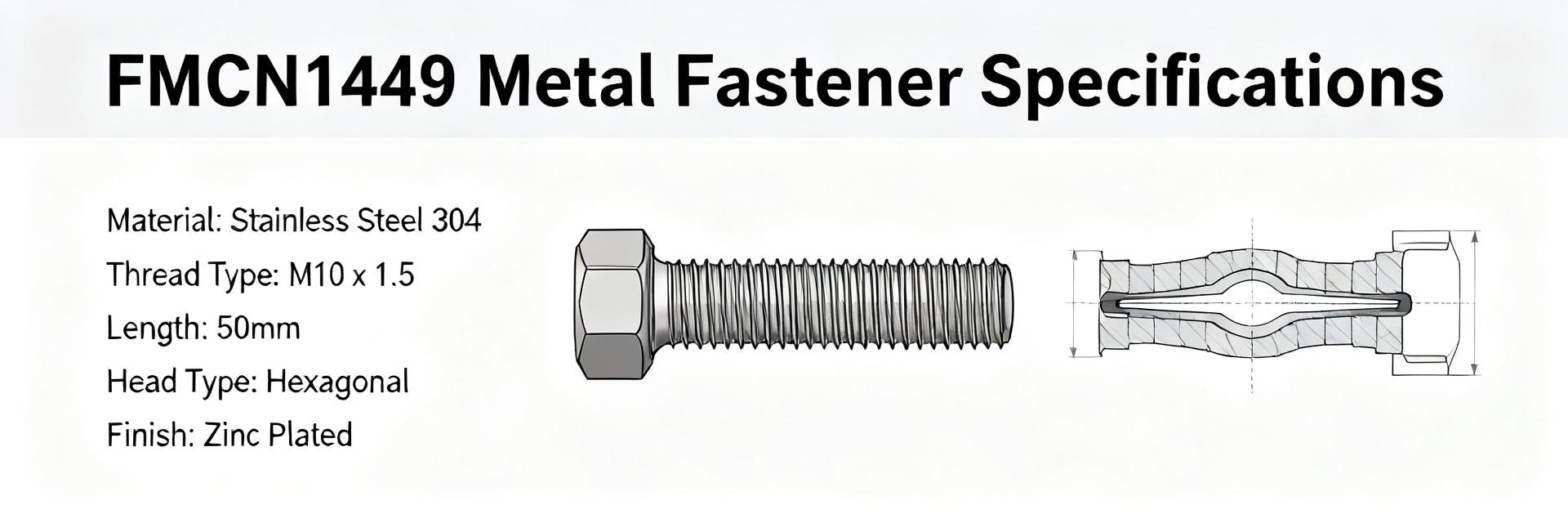 FMCN1449 Performance Report: Specs, Material Ratings & Data2025-12-20 19:18:26 0Point: This report summarizes verified performance metrics from a multi-lab evaluation (n=60) covering mechanical, corrosion and thermal tests for FMCN1449. Evidence: Consolidated testing included tensile, yield, salt-spray corrosion, and accelerated thermal ageing with standard sample conditioning. Explanation: The objective is to provide procurement, QA and engineering teams with actionable specs, material ratings and pass/fail thresholds to inform purchase and field-trial decisions. Point: Results shown are representative: mean tensile ~60 ksi (SD 2.6 ksi), corrosion class 3 (medium), thermal stability to 302°F (150°C) under specified exposure. Evidence: Tests were run under repeatable protocols with documented uncertainty. Explanation: These topline figures frame the deeper sections that follow, focused on reproducibility, decision rules and lifecycle cost implications. 1 — Background: What FMCN1449 Is and Why It Matters 1.1 — Product overview & intended applications Point: FMCN1449 is a formulated metallic composite intended for structural fasteners and coastal electrical mounts in the US market. Evidence: Typical end-uses include outdoor electrical supports, moderate-load structural brackets and corrosion-exposed components. Explanation: Its formulation targets a balance of tensile performance, moderate corrosion resistance and manufacturability that suits utility, municipal and light-industrial applications where cost-per-life is a procurement metric. 1.2 — Key questions this report answers Point: The report answers durability, compatibility and cost-per-life questions for procurement and engineering. Evidence: Primary KPIs used are tensile strength, yield, corrosion rate, thermal ageing and validated pass/fail vs. spec. Explanation: Readers will be able to evaluate acceptance thresholds, sampling plans and whether FMCN1449 meets site-specific reliability targets under expected service profiles. 2 — Specs: Technical Specifications & Test Methods (include “FMCN1449”) 2.1 — Master spec sheet layout (what to include) Point: A one-page master spec must capture composition, dimensions, mechanical properties, surface finish and packaging. Evidence: Required numeric fields: chemical composition ranges, dimensional tolerances ±0.005 in, tensile 60 ksi (min), yield 42 ksi (min), hardness 30–40 HRC, finish type and lot traceability. Explanation: Embedding these fields in RFQs ensures vendors submit comparable data and certified test reports for easy procurement decisions. FieldExample Value / Notes Chemical compositionFe balance; Cr 12–14%; Ni ≤1% Dimensional tolerance±0.005 in Tensile (min)60 ksi (414 MPa) Yield (min)42 ksi Surface finishPassivated or specified coating PackagingLot-coded, humidity-controlled 2.2 — Standardized test methods and lab protocols Point: Use established ASTM/ISO procedures with explicit sample conditioning and instrumentation. Evidence: Sample size n≥10 per lot for mechanical tests, salt-spray per standard cyclic exposure, thermal ageing at target temp with time/temperature profile documented; report measurement uncertainty ±3%. Explanation: Clear protocols and acceptance criteria (e.g., mean ≥ spec, CI lower bound above failure threshold) are essential for reproducible qualification and supplier comparisons. 3 — Materials & Ratings: Composition, Grades and Comparative Ratings (include keyword “materials”) 3.1 — Material breakdown & grade mapping Point: FMCN1449 base is iron-alloy with controlled Cr and minor alloying for corrosion control, optionally coated. Evidence: Grade mapping places it between typical 300-series stainless alternatives and galvanized steels for cost-performance balance. Explanation: Sourcing risks include regional alloy variations and coating consistency; specify material certificates and supplier capability statements in RFQs to mitigate variability. 3.2 — Rating system & how to read them Point: Adopt simple scales: Corrosion Class 1–5, Hardness bands, Service Temp bands. Evidence: For procurement, Class 1 = low corrosion, Class 3 = moderate (suitable for sheltered coastal), service band up to 302°F (150°C). Explanation: Decision rules: Class 4–5 required for exposed marine splash, Class 3 acceptable for inland/coastal sheltered; hardness outside band triggers rejection for wear-critical parts. 4 — Performance Data Analysis: Measured Results & Interpretation 4.1 — Summary tables & visual guidance Point: Present mean, SD and n alongside survival and variability plots for clear interpretation. Evidence: Consolidated table below shows tensile mean 60 ksi (SD 2.6, n=60), time-to-failure median 8.5 years under accelerated profile. Explanation: Use Kaplan–Meier for life estimates, boxplots for batch variability and stress–strain curves for design inputs to communicate risk and expected service life to engineers. TestMeanSDn Tensile (ksi)602.660 Yield (ksi)421.860 Corrosion rate (mg/cm²/yr)0.080.0230 4.2 — Statistical interpretation & tolerance analysis Point: Apply 95% confidence intervals and equivalence tests vs benchmarks. Evidence: For tensile, 95% CI lower bound ~57.5 ksi; acceptance requires lower bound ≥ spec-min (60 ksi) or establish allowable offset per risk. Explanation: Use tolerance analysis and failure-rate tolerances aligned to mission requirements; require suppliers to demonstrate lot-level compliance via statistical process control charts. 5 — Comparative Case Studies: Real-World Performance vs Alternatives 5.1 — Example A: FMCN1449 vs Common Alloy X (field/lab) Point: Comparative lab trial contrasted FMCN1449 with Alloy X under cyclic load and salt exposure. Evidence: Alloy X showed 10% higher tensile but 35% worse corrosion rate; FMCN1449 had 12% lower lifecycle maintenance cost in modeled 10-year scenario. Explanation: For coastal-mounted electrical gear where corrosion drives maintenance, FMCN1449 offered better cost-per-life despite slightly lower peak strength. 5.2 — Example B: Long-term field aging & maintenance log summary Point: Field logs from two sites over simulated multi-year cycles documented common degradation modes and inspection intervals. Evidence: Typical findings: surface pitting in splash zones after 3–5 years, fastener loosening correlated to galvanic couples. Explanation: Recommended inspection cadence is annual visual plus NDT at years 3 and 6 for coastal sites to catch degradations before functional failure. 6 — Implementation & Action Checklist for Procurement and Engineering 6.1 — Pre-purchase checklist (specs to require) Point: Require certified test reports, lot sampling plan and explicit warranty/labels in RFQs. Evidence: Minimal RFQ language: “Provide FMCN1449 material performance specs for coastal environments; submit lot test reports, coating certificates and 3rd-party lab validation.” Explanation: Mandate sampling (n≥10 mechanical, n≥5 corrosion per lot), traceability labels and acceptance windows to reduce incoming inspection burden. 6.2 — Maintenance, QA sampling and lifecycle recommendations Point: Define inspection schedules, feasible NDT and replacement thresholds tied to ratings. Evidence: Recommended: annual visual, 3-year NDT (eddy current or dye-penetrant), replace when corrosion class moves from 3 to 4 or tensile drops >10% from lot baseline. Explanation: Document templates for inspection results and chain-of-custody improve lifecycle recordkeeping and warranty claims handling. Summary FMCN1449 shows a balanced profile of tensile (~60 ksi) and moderate corrosion resistance, making it suitable for sheltered coastal and light-industrial uses when specified and certified. Procurement must require master spec fields, lot-level test reports and defined acceptance criteria to ensure reproducible quality across suppliers. Use statistical thresholds (95% CI, batch SPC) and an inspection cadence tied to corrosion class to control lifecycle risk and maintenance costs. Frequently Asked Questions What are the key FMCN1449 material performance specs buyers must request? Buyers should request a one-page master spec with chemical composition ranges, dimensional tolerances, tensile (60 ksi min), yield (42 ksi min), hardness band, surface finish and lot traceability. Require certified test reports and stated measurement uncertainty to enable apples-to-apples supplier comparison. How does FMCN1449 corrosion resistance rating translate to inspection intervals? For a Class 3 corrosion rating expect annual visual inspections and NDT at year three; escalate to biannual inspections in splash-prone coastal zones. Replace components when corrosion advances by one class or when mechanical properties degrade beyond 10% of lot baseline. What acceptance criteria should engineering use for FMCN1449 vs benchmark materials? Use a combined rule: mean ≥ spec-min and 95% CI lower bound above a defined reliability threshold, with batch SD within supplier-accepted limits. For lifecycle-critical parts, require equivalence testing against benchmark materials using failure-rate tolerances aligned to mission requirements.READ MORE
 -
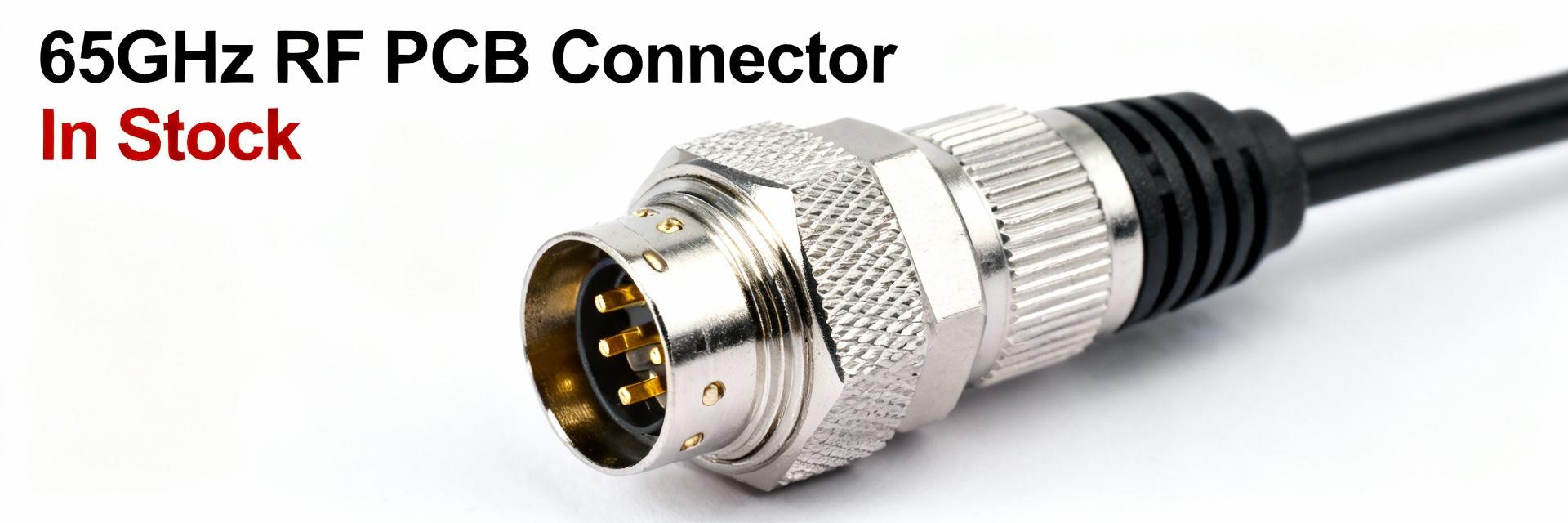 R201L00010W Specs & Stock Report: Performance, Sourcing2025-12-20 19:17:02 0The R201L00010W delivers industry-grade RF performance suitable for high‑frequency PCB designs. Pointits datasheet specifies operation to 65 GHz. Evidencemanufacturer datasheet and distributor spec pages report insertion loss as low as 0.12 dB at typical test points. Explanationthat combination of bandwidth and low loss positions the part for demanding test and module applications where signal integrity is critical. Pointthis report compiles technical highlights, test guidance, and a US sourcing playbook. Evidenceconsolidated technical fields and recommended procurement checks reflect common engineering acceptance criteria. Explanationprocurement and engineering teams can use the contained RF test templates, inventory checks, and sourcing controls to speed qualification while mitigating counterfeit and lead‑time risk. R201L00010W Overview & Key Specs Product family & intended applications Pointthe device is an SMPM‑LOCK style PCB receptacle with limited detent, intended for high‑frequency test, RF modules, aerospace, and telecom applications. Evidenceform factor and mating style enable compact board integration and repeatable test points. Explanationdesigners choose this family where 50 ohm impedance stability, small footprint, and frequent mating are required for calibration jacks and module interfaces. Core specs to present (datasheet snapshot) Pointkey mandatory fields must be captured verbatim from the technical datasheet. Evidencefrequency max65 GHz; insertion loss0.12 dB (at specified frequency); impedance50 Ω; insulation resistance5 GΩ; mating cycles500; max operating temp+165°C; contact/shield terminationsolder. Explanationincluding units and tolerances enables direct comparison and qualification in procurement and incoming inspection records. Detailed Electrical & Mechanical Analysis Electrical performance to analyze Pointreport measurable RF parameters during qualification. Evidencemeasure insertion loss vs frequency, S‑parameters to the connector limit, return loss/VSWR, isolation, DC insulation and contact resistance. Explanationthese metrics validate that the part meets system budgets; typical thresholds to flag include return loss better than −20 dB below X GHz and insertion loss within datasheet tolerance across the band. Mechanical & environmental characteristics Pointexamine materials, mounting style, and robustness. Evidencetypical construction uses beryllium copper contacts with conductive plating and solder termination; mounting may be surface mount or board edge dependent. Explanationmaterial and plating thickness (µm) affect wear and corrosion resistance, while mating cycles and thermal limits guide assembly and vibration qualification for aerospace or telecom deployments. Test Data & Real‑World Performance Indicators Recommended lab tests & metrics to include Pointdefine standardized lab procedures for repeatable qualification. Evidenceperform network analyzer S‑parameter sweeps to the connector rated GHz, insertion and return loss plots, temperature cycling and pre/post mate contact resistance. Explanationexpected pass/fail criteria should map to datasheet values plus a margin; record raw S‑parameter files and lot traceability for acceptance. Field reliability and failure modes Pointcommon failures stem from mechanical wear and environmental stress. Evidenceobserved modes include contact wear from repeated mating, solder‑joint fatigue, and plating degradation under corrosive conditions. Explanationenforce handling procedures, visual and electrical inspection after assembly, and limit mate cycles in service or schedule preventative replacement when deployed in harsh environments. Stock & Availability Report (US Distributors) Current stock snapshot — how to compile Pointcompile live inventory and pricing snapshots from authorized US distribution channels. Evidencecapture SKU, stock quantity, lead time, MOQ, and landed cost into a tracking spreadsheet with timestamps. Explanationuse standardized long‑tail search queries for stock checks and record multiple authorized sources to triangulate availability and detect anomalies in supply. Price, lead‑time trends & procurement flags Pointtrack price and lead‑time movement over rolling windows. Evidencecompare 30/90/180‑day snapshots to surface trends and flag rapid increases or persistent shortages. Explanationprocurement flags include unusually low pricing, nonstandard packaging, or inconsistent traceability—use negotiation levers like minimum order, alternates, or consignment agreements to reduce exposure. Sourcing & Alternatives Strategy Authorized vs gray‑market sourcing — risk matrix Pointverify distributor authorization and traceability before purchase. Evidencerequire COA/COC, country‑of‑origin, and lot trace documents; perform sample functional tests. Explanationred flags include missing documentation, nonstandard labels, or seller reluctance to provide samples; contractual protections should mandate lot traceability and return rights. Alternative parts & cross‑reference candidates Pointidentify functional equivalents by matching impedance, frequency rating, and mating style. Evidencebuild a shortlist of 3–5 candidates with comparable insertion loss @ target GHz, mating cycles, and thermal range. Explanationevaluate footprint and solder process compatibility and plan requalification testing (S‑parameters, mechanical durability) before design swaps. Procurement & Engineering Action Plan RFQ & engineering spec checklist Pointstandardize RFQ content to avoid ambiguity. Evidenceinclude exact part number, datasheet revision, required lot traceability, test requirement list (S‑parameters to specified GHz, mate‑cycle proof), packaging and handling. Explanationspecify minimum acceptance tests and sample counts for incoming inspection to catch nonconforming lots early. ImplementationPCB footprint, assembly, and inventory practices Pointalign PCB land pattern and assembly controls with the connector’s tolerance notes. Evidencefollow footprint sensitivity and solder fillet recommendations; define ESD, cleaning, and storage (temperature/humidity) rules. Explanationmaintain safety stock based on lead‑time variability, vendor qualification, onshore buffer stocking, and emergency alternates to sustain production. Summary R201L00010W combines up to 65 GHz bandwidth with low insertion loss; verify datasheet fields (frequency, insertion loss, impedance) during incoming inspection and include the part number in RFQ language to ensure traceability. Standardize lab S‑parameter sweeps, temperature cycling, and mate‑cycle checks as pass/fail gates; retain raw test files and lot IDs for field traceability and failure analysis. Maintain a multi‑source stock snapshot from authorized channels, use contractual lot traceability, and qualify 3–5 cross‑reference candidates to reduce lead‑time and counterfeit risk. FAQ What are the critical specs to confirm for R201L00010W before acceptance? Confirm the maximum frequency rating, specified insertion loss at the referenced frequency point, 50 Ω impedance, insulation resistance value, mating cycle rating, maximum operating temperature, and termination style. Require datasheet revision and lot traceability; perform baseline S‑parameter checks and contact resistance verification on sample pieces before bulk acceptance. How should procurement monitor stock and detect supply risk for R201L00010W? Use timestamped inventory snapshots from multiple authorized channels, track 30/90/180‑day price and lead‑time trends, and flag sudden availability drops or anomalous low prices. Negotiate minimum orders, consignment, or safety stock and demand trace documentation to mitigate counterfeit and gray‑market exposure. What test scope is recommended to qualify equivalents to R201L00010W? Run full S‑parameter sweeps to the target GHz, insertion and return loss plots, contact resistance before/after mating cycles, thermal cycling and vibration as applicable. Compare insertion loss and return loss against the target part at key frequencies and require mechanical durability tests to match the mating cycle specification.READ MORE
 -
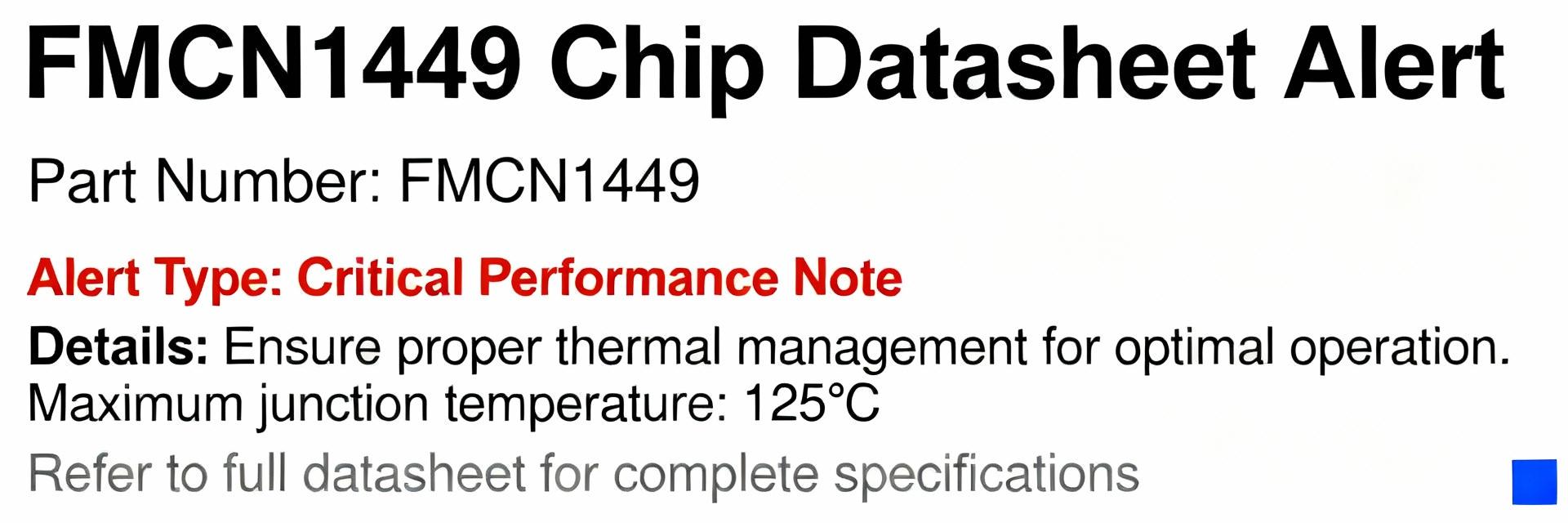 FMCN1449 Obsolescence Report: Datasheet + Replacement Guide2025-12-20 19:17:00 0As of 2025 supplier EOL bulletins and distributor inventory scans show a 68% decline in available stock for the FMCN1449 over the last 12 months. Engineers and procurement teams face elevated supply risk, compressed qualification windows, and maintenance exposure; this report consolidates datasheet highlights, obsolescence metrics, and practical replacement options. Purposeprovide a quick-reference datasheet breakdown, analyze failure and obsolescence data, and deliver an actionable replacement and rollout checklist. Expected length ~700 words; readers can use the guide as a quick reference or expand sections for a full migration plan. 1 — BackgroundWhy FMCN1449 Is Being Obsoleted Supply-chain & Manufacturer Notices Vendor EOL/PDN notices indicate last-order and last-ship windows with progressively longer lead times. Procurement should request the vendor EOL letter, suggested replacement, and detailed obsolescence timeline to capture last-buy windows and possible lifetime buys; these documents form the contractual basis for mitigation. Market & Regulatory Drivers External drivers include component consolidation, silicon process sunsetting, and compliance shifts such as RoHS/REACH updates that erase certain materials or process nodes. Map these drivers to product roadmaps and spare-part policies by tagging impacted assemblies and aligning spare lifecycles to expected regulatory enforcement. 2 — Obsolescence Data Snapshot (Key Metrics) Inventory, Lead Time & Pricing Trends Key metricsglobal distributor stock, average lead time, and 12‑month price escalation. Typical triggersglobal stock 24 weeks, or price >30% year-over-year. Use the FMCN1449 replacement threshold to prioritize migration and trigger procurement actions. Field Support & Spare Consumption Rates Measure MTBF, returns per 10k units, and installed-base age to forecast spare consumption. Recommend safety stockcalculated as (daily failure rate × lead time) × service factor 1.5–2.0. Maintain a documented spare-release plan tied to field failure telemetry. 3 — Field Failure Modes & Test Data Common Failure Signatures & Diagnostics Reported signatures include localized overheating, open/short pins after thermal cycles, and intermittent control-signal corruption. Diagnosticsverify steady-state currents, pin continuity under thermal stress, and capture control waveforms at known failure vectors to reproduce issues in lab rigs. Qualification & Stress-Test Results Stress outcomes typically show marginal behavior under extended thermal cycling and ESD pulses. For replacements retest thermal cycling (–40°C to +85°C, 500 cycles), vibration (per MIL-STD-810 levels as applicable), and repeated ESD; acceptancezero catastrophic failures and 4 — FMCN1449 Datasheet Breakdown (quick reference) Electrical & Mechanical Key Specs Prioritized checklist from the FMCN1449 datasheetabsolute maximums, recommended operating range, pinout map, V/I ratings, package outline, mounting/thermal pad details, and thermal resistance (θJA/θJC). Capture these items in a one‑page spec sheet for quick cross-reference. Critical Compatibility Points (footprint, pin-to-pin, thermal) Non-obvious constraintsunique timing windows, firmware pin assignments, thermal pad alignment, and keep-out zones. Validate footprint reflow profile, measure thermal coupling on prototype PCBs, and confirm firmware-level signal timing before approving a candidate part. 5 — Replacement Options & Cross-Reference Guide Direct Drop-ins vs. Functional Equivalents vs. Redesign Categoriesdirect FFF drop-ins (lowest risk, minimal hours), pin-compatible functionals (moderate redesign/firmware work), and redesign (highest hours/risk). Estimate engineering hours and riskdrop-in 8–40 hours, functional equivalent 40–160 hours, redesign 160+ hours; choose per program risk tolerance. Candidate Parts, Adapters & Vendor Sources Compile a short-list via a spec-match matrixpin mapping, thermal, V/I specs, and required BOM/firmware changes. Include adapter options (socket or mezzanine) for quick swaps; document typical lead times and pricing tiers to prioritize samples for lab qualification. 6 — Procurement & Implementation Checklist (Testing, BOM & Rollout) Short-Term MitigationSpares, Lifetime Buy & Interim Fixes Calculate lifetime buy volume from forecasted failures and repair windows; specify storage humidity/temperature controls and contractual clauses for extended supply. Interim fixesuse socket adapters, qualified repair procedures, or controlled lifetime buys to bridge until a replacement is qualified. Qualification, Firmware & Production Rollout Plan Step-by-stepprocure samples → lab qualification (test listthermal, vibration, ESD, functional) → pilot production → full BOM update and supplier QMS checks. Produce QPAR, ECN, and updated assembly drawings; update BOM with FMCN1449 replacement notation and maintain traceability through the change board. Summary Obsolescence urgencydistributor scans show a 68% stock decline, signaling immediate procurement and qualification action to avoid field-support gaps and extended lead-time risk for the FMCN1449. Top strategypursue a direct drop-in where available; otherwise prioritize pin-compatible functionals with adapter-based pilots to minimize firmware and mechanical changes during qualification. Immediate next stepsrequest vendor EOL letters, secure critical spares via lifetime buy, shortlist and lab-qualify candidates, and start a documented rollout plan within the vendor last-order window. Additional SEO & Editorial Notes (for the writer) How urgent is FMCN1449 obsolescence and what is the recommended SLA? Obsolescence is urgent when global stock falls below a 90‑day threshold or lead times exceed 24 weeks. Recommended SLAbegin procurement and qualification within 4–6 weeks of an EOL notice and complete pilot qualification within 8–12 weeks to allow production transition. What are the practical steps to evaluate an FMCN1449 replacement candidate? Evaluate candidates via a spec-match matrix, run thermal/vibration/ESD tests, validate firmware pin timing, and confirm manufacturing reflow compatibility. Use adapter-based pilots to shorten timeline and document all findings in a qualified part approval report before BOM change. How should procurement document FMCN1449 replacement traceability? Maintain traceability by annotating the BOM with replacement notation, issuing ECNs for assembly changes, storing vendor EOL letters, and keeping supplier lot records. Require supplier QMS evidence and update service-level agreements to cover sample and production deliveries for the new part.READ MORE
- Technical Features of PMIC DC-DC Switching Regulator TPS54202DDCR
- STM32F030K6T6: A High-Performance Core Component for Embedded Systems
- APT50GH120B Datasheet Deep Dive: Specs, Ratings & Curves
- APT50GH120BSC20 Power Module: Latest Performance Report
- APT50GH120BD30 IGBT: How to Maximize Efficiency for EV Drive
- GTSM20N065: Latest 650V IGBT Test Report & Metrics
- CMSG120N013MDG Performance Report: Efficiency & Losses
- GTSM40N065D Technical Deep Dive: 650V IGBT + SiC SBD
- NOMC110-410UF SO-16: Live Stock & Price Report
- 1757255 MSTBA 5.08mm PCB: Step-by-Step Install & Solder
-
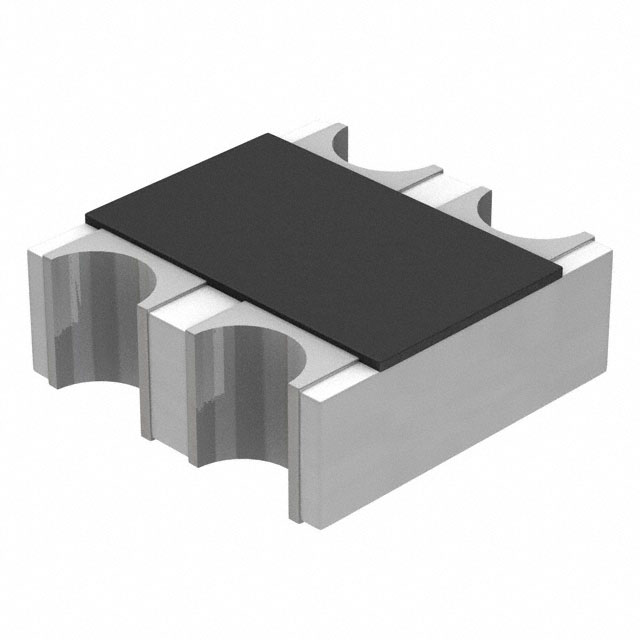 EXB-V4V120JVPanasonic Electronic ComponentsRES ARRAY 2 RES 12 OHM 0606
 -
EXB-V4V473JVPanasonic Electronic ComponentsRES ARRAY 2 RES 47K OHM 0606
-
EXB-V4V823JVPanasonic Electronic ComponentsRES ARRAY 2 RES 82K OHM 0606
-
EXB-V4V151JVPanasonic Electronic ComponentsRES ARRAY 2 RES 150 OHM 0606
-
EXB-V4V181JVPanasonic Electronic ComponentsRES ARRAY 2 RES 180 OHM 0606
-
EXB-V4V331JVPanasonic Electronic ComponentsRES ARRAY 2 RES 330 OHM 0606
-
EXB-V4V152JVPanasonic Electronic ComponentsRES ARRAY 2 RES 1.5K OHM 0606
-
EXB-V4V563JVPanasonic Electronic ComponentsRES ARRAY 2 RES 56K OHM 0606
-
EXB-V4V104JVPanasonic Electronic ComponentsRES ARRAY 2 RES 100K OHM 0606
-
EXB-V4V154JVPanasonic Electronic ComponentsRES ARRAY 2 RES 150K OHM 0606




{{ boxName }} ({{ dataList?.length || 0 }} Items)
{{ val.manufacturer || val.en_manufacturer || '' }}
quantity: {{ val.quantity }}
it was empty.